RV Batteries Know It All: A Guide to Types, Maintenance, and selection
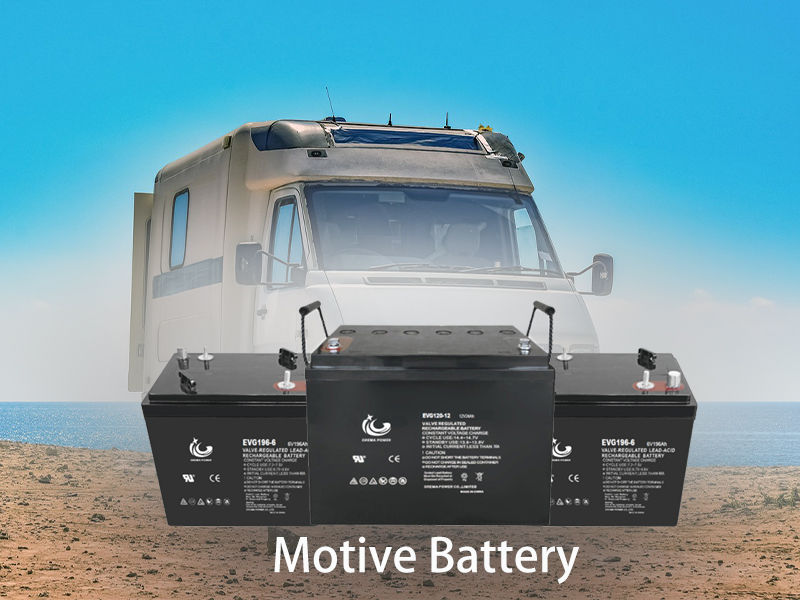
In today's increasingly popular RV travel, the importance of RV batteries is self-evident. It is the key to the normal operation of various equipment during the journey.The OREMA Marine/RV Battery is an outstanding product in our range that consistently outperform traditional flooded, AGM Batteries, and Gel Batteries. They offer remarkable dual-purpose functionality, as they can provide both high energy for short-term starting and consistent power for longer-term cycling, making them versatile for various applications.
To properly maintain and extend the life of your RV batteries, you need to have a basic understanding of what a battery is and how it works. There are numerous types of batteries that can be used in RVs, but the most widely used are deep-cycle lead acid storage batteries. It’s important you use the right battery for the type of application. Deep-cycle batteries have thicker plates than automotive starting batteries. This means deep-cycle batteries are designed to be discharged and recharged repeatedly. They can be discharged and recharged which is one complete cycle hundreds of times before reaching the end of the life cycle.

RV batteries should always be deep-cycle batteries. The life cycle of a battery is dependent on how often and how much it is discharged versus how well it is maintained. One of the most important things to understand about RV batteries is you must recharge your battery after using it. When you go camping, you start the trip with a fully charged battery, meaning it is 100% charged. If you are dry camping for three days and nights without any electrical connection, the battery slowly drops from 100% to 90%, 80%, and then 70%. When the trip is over, you must recharge the battery back to 100% so it doesn’t get damaged. When a battery sits in a discharged state, sulfation forms on the plates which is the leading cause for dead batteries. Every RV has a built-in battery charger in the RV’s converter. When you plug the RV into electricity, the battery charger automatically starts recharging the battery. How long it takes to charge the battery depends on what percentage the battery is discharged. Now, I wanna discuss the three most popular battery types used in RVs and which type of battery might be right for you.
The most common type of RV battery is a deep-cycle lead acid battery. Lead acid batteries get the name because they use lead plates submersed in a mixture of sulfuric acid and distilled water to manufacture the batteries. Car starting batteries have thin lead plates, whereas deep-cycle batteries have thick lead plates. The thicker plates are the reason the battery can be discharged and recharged repeatedly. Battery amp hours. Batteries are rated in amp hours. Amp hours tell you how much amperage a battery can provide per hour. Depending on how you camp, the amp hour rating dictates the size of battery you need. Battery amp hour ratings divided by hours used equal amps available. For example, a 100 amp hour battery divided by 8 hours of use equals 12.5 amps per hour. There are three basic groups or sizes of deep-cycle lead acid batteries: group 24, group 27, and group 31. The larger the number, the larger the battery and the higher amount of amp hours you get from the battery. Group 24 is 70 to 85 amp hours, group 27 is 85 to 100 amp hours, and group 31 is 100 to 125 amp hours. Some RV owners use 6-volt deep-cycle lead acid batteries. The way the batteries are wired and how many batteries are in the battery bank determines how many amp hours you have. RV owners who camp off the grid, using solar panels, typically have large battery banks with lots of amperage.
OREMA Marine/RV batteries are versatile, as they are extensively used for a range of applications including Marine, Caravan, Boat, and Truck. This broad use-case potential further demonstrates their adaptability and efficiency. Their high performance in various vehicles and environments, their resilience in diverse weather conditions, and their ability to deliver power effectively irrespective of the charge level make them a superior choice for a wide range of applications.
Understanding these knowledge of RV batteries can help RV enthusiasts better maintain and choose the battery suitable for their own RV, so as to ensure that they have a reliable power supply during the journey, enjoy the fun of RV travel, and avoid the trouble and inconvenience caused by battery problems.
Unveil the Superiority of Solar GEL Deep Cycle Battery
Thanksgiving: A Symphony of Gratitude
Related Article